Private Jet Charter | Private Jet Rental

Which airport you use depends on aircraft size, whether you’re arriving internationally, and where in the city you’re headed.
The in-city airport, ~8 km from the Faria Lima and Paulista business districts — the fastest way into São Paulo. Runways are relatively short (main ~1,940 m / 6,365 ft), so it suits light through midsize and some super-midsize jets; heavy aircraft typically use GRU or VCP. CGH is slot-controlled with a night curfew (roughly 23:00–06:00) and prioritizes domestic traffic, so international flights clear at GRU first, then reposition. Executive handling and FBO services operate on the field; we confirm the FBO and slot with your trip.
São Paulo’s main international gateway, ~25 km northeast of downtown, with long runways (up to ~3,700 m / 12,140 ft) that handle every category up to ultra-long-range and heavy jets. Full customs and immigration for international arrivals are here, plus dedicated executive-aviation and FBO handling. GRU is where intercontinental charters clear Brazil. Transfer to the business districts is ~45–70 minutes by car, or a ~10–15 minute helicopter hop into the city helipads.
The dedicated general- and executive-aviation airport inside the city, long the hub of São Paulo’s enormous helicopter fleet. Its single runway (~1,600 m / 5,250 ft) handles turboprops and light jets; it’s ideal for the helicopter transfers that move executives across São Paulo’s traffic. It’s domestic-only — no international customs — so it pairs with a GRU clearance for inbound international trips.
~95 km northwest in Campinas, with a long runway (~3,240 m / 10,630 ft) and full international customs. Viracopos is an uncongested alternative to GRU for heavy and large-cabin jets, popular when GRU slots are tight or the destination is the Campinas/interior region. Expect ~1h15 by car into central São Paulo, or a quick helicopter leg.
São Paulo’s traffic makes helicopters the executive standard — the city has hundreds of rooftop helipads. We can arrange a helicopter transfer from GRU, VCP, or Campo de Marte straight to a downtown helipad, turning a 60-minute drive into a 10-minute flight. See our helicopter charter page.
International arrivals clear customs and immigration at GRU or VCP. US, Canadian, and Australian citizens now need a Brazilian e-Visa (applied for online before travel — reinstated in 2025, no visa on arrival), plus a passport valid for the stay. Non-scheduled (charter) flights require advance Brazilian landing and overflight permits, which we arrange before departure. Note Brazil’s cabotage rules: foreign-registered (e.g. N-registered) aircraft generally cannot fly paying passengers point-to-point within Brazil — domestic legs like São Paulo–Rio are flown on Brazilian-registered (PR/PP/PT) aircraft. We handle the registration mix so your domestic and international legs are both compliant.
Not sure which airport? Call +1-561-421-8620 and we’ll match it to your aircraft and schedule.
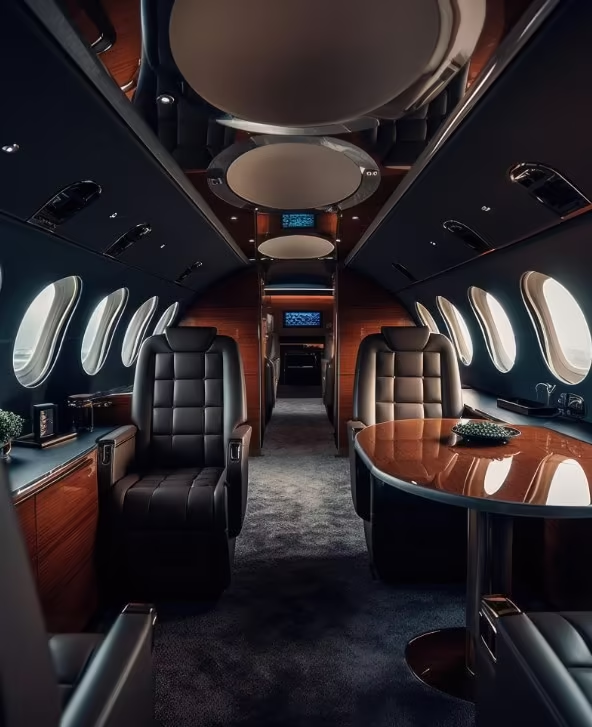
Indicative one-way ranges — not quotes. Built from current market charter data (November 2026). Actual pricing varies by aircraft, routing, permits, and availability. São Paulo is a long-haul trip from the US, so most North American routes need a heavy or ultra-long-range jet, sometimes with a fuel stop.
| Route | Aircraft Class | Flight Time | Estimated Price (USD) |
|---|---|---|---|
| Miami → São Paulo (GRU) | Heavy / Ultra-long | ~8h 15m | $92,000–$135,000 |
| New York (JFK) → São Paulo (GRU) | Ultra-long-range | ~9h 45m | $108,000–$155,000 |
| Teterboro (TEB) → São Paulo (GRU) | Ultra-long-range | ~9h 45m | $108,000–$155,000 |
| São Paulo → Rio de Janeiro | Light jet | ~45–55 min | $8,000–$14,000 |
| São Paulo → Punta del Este (PDP) | Midsize / Super-mid | ~2h 45m | $24,000–$40,000 |
Ranges reflect typical one-way market pricing by cabin class and distance. Not a quote or an offer. Long US routes may include a technical fuel stop depending on aircraft and payload; domestic Brazilian legs fly on Brazilian-registered aircraft (see cabotage, above).
Get São Paulo pricing. Call +1-561-421-8620 or request a quote.
São Paulo is a long-haul destination from North America, so range drives the aircraft choice. Short regional legs (Rio, Punta del Este, Buenos Aires) open up light and midsize jets; US nonstops need a heavy or ultra-long-range cabin.
| Class | Example Aircraft | Range | Passengers | Nonstop from US? |
|---|---|---|---|---|
| Light | Phenom 300, Citation CJ3 | ~1,800–2,000 nm | 6–7 | No — regional only (Rio, EZE) |
| Midsize | Citation XLS, Hawker 900XP | ~2,000–2,900 nm | 7–8 | No — South American routes |
| Super-midsize | Challenger 350, Citation Longitude | ~3,200–3,500 nm | 8–9 | No — regional + fuel-stop options |
| Heavy | Challenger 605, Gulfstream G450 | ~4,000–4,500 nm | 10–14 | Miami nonstop; NYC usually a fuel stop |
| Ultra-long-range | Gulfstream G650, Global 6000/7500 | ~6,000–7,500 nm | 12–16 | Yes — nonstop from Miami, NYC/Teterboro, even the West Coast |
Ranges are typical still-air figures; real-world range varies with payload, winds, and runway. We match the aircraft to your city pair and passenger count.
Need a nonstop to São Paulo? Call +1-561-421-8620 and we’ll spec the right cabin. See the full fleet.
Fly Bitlux is a private jet charter broker, arranging flights only on ARGUS- and Wyvern-rated Part 135 operators — independent third-party safety ratings. For Brazil that means the right long-range aircraft, Brazilian landing and overflight permits, GRU/CGH/VCP slots, the e-Visa and customs handled, and — where it saves hours — a helicopter transfer into the city. Ask us for our ARGUS and Wyvern credentials.

Indicative one-way ranges: Miami–São Paulo about $92,000–$135,000 on a long-range heavy jet; New York or Teterboro–São Paulo about $108,000–$155,000 on an ultra-long-range jet; São Paulo–Punta del Este about $24,000–$40,000; and the São Paulo–Rio hop from about $8,000 on a light jet. Market estimates, not quotes.
Congonhas (CGH) is closest to the business districts and best for light-to-midsize jets, but it’s slot-limited with a night curfew. International and larger-cabin flights use Guarulhos (GRU), which has full customs; Viracopos (VCP) in Campinas is the uncongested option for heavy jets. Campo de Marte (SBMT) is the in-city executive and helicopter hub. We match the airport to your aircraft and schedule.
Yes — light, midsize, and some super-midsize jets. Congonhas has a relatively short main runway (~1,940 m / 6,365 ft), is slot-controlled, and has a night curfew (~23:00–06:00), so heavy jets and off-hours arrivals use GRU or Viracopos instead.
Yes. As of 2025 Brazil again requires US, Canadian, and Australian citizens to hold a visa, issued as an electronic visa (e-Visa) applied for online before travel — there is no visa on arrival. A passport valid for your stay is also required. Apply well ahead; we handle the Brazilian landing and overflight permits on the aircraft side.
Yes, but note Brazil’s cabotage rules: a foreign-registered (e.g. N-registered) jet generally can’t carry paying passengers point-to-point within Brazil, so domestic legs like São Paulo–Rio fly on a Brazilian-registered aircraft. We arrange the registration mix so your international and domestic legs are both legal. São Paulo–Rio is about 45–55 minutes by light jet.
About 8 hours 15 minutes nonstop on a long-range heavy jet. From New York or Teterboro it’s roughly 9h45 on an ultra-long-range aircraft; shorter-range jets need a technical fuel stop.